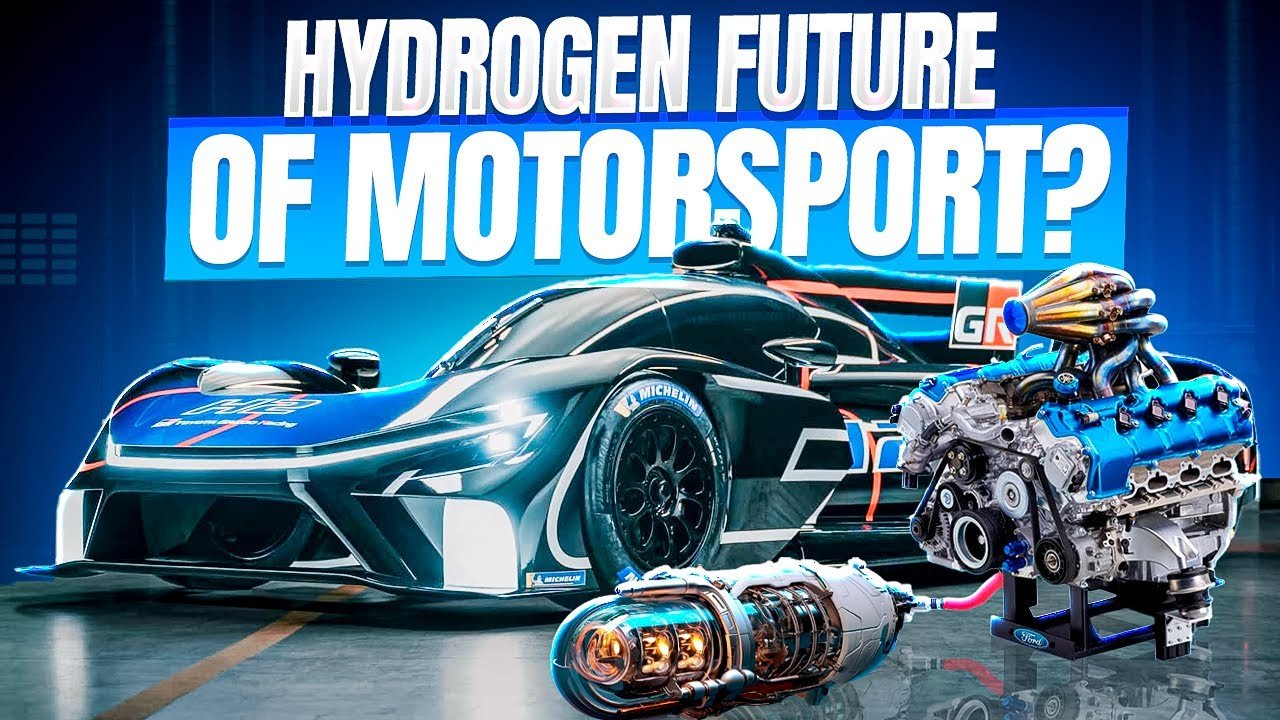
Toyota is quietly pushing the boundaries of motorsport innovation—and this time, it’s not electric. Instead, the Japanese auto giant is betting big on hydrogen-powered race cars, and the results could reshape the future of racing as we know it.
Toyota’s Hydrogen Racing Dream Is Real
Toyota has already unveiled multiple hydrogen race car concepts under its performance division Toyota Gazoo Racing, including the GR H2 Racing Concept and the newer GR LH2 Racing Concept.
These aren’t just show cars. They are serious prototypes designed for endurance racing, especially the legendary 24 Hours of Le Mans.
- The GR H2 Racing Concept was revealed as a preview of a future hydrogen-powered race car class.
- The newer GR LH2 Racing Concept uses liquid hydrogen fuel, marking a major technological leap.
👉 The goal? Compete in a dedicated hydrogen category expected to debut around 2026.
Hydrogen Engine + Hybrid Power = Game Changer
Unlike typical EV race cars, Toyota is focusing on hydrogen combustion engines (H2 ICE) combined with hybrid systems.
Here’s why that matters:
- ✅ Keeps the sound and feel of traditional racing engines
- ✅ Produces near-zero emissions (mostly water vapor)
- ✅ Allows fast refueling, unlike battery EVs
Hydrogen can be used in two ways:
- Fuel cells (like EVs with hydrogen)
- Combustion engines (like petrol engines, but cleaner)
Toyota is clearly betting on the second option for racing
Tested on Track — Not Just Theory
This isn’t just concept-stage hype. Toyota has already been racing hydrogen cars in real competitions:
- Hydrogen-powered GR Corolla race car competed in Japan’s Super Taikyu Series
- Successfully completed endurance races, proving reliability
Even more impressive:
- A liquid hydrogen race car completed a full 24-hour endurance race—a global first
What Makes Toyota’s Hydrogen Race Car Special?
Toyota’s approach is unique because it blends:
🔹 Liquid Hydrogen Technology
- Stored at extremely low temperatures (-253°C)
- Higher energy density than gaseous hydrogen
🔹 Hybrid Racing System
- Combines hydrogen engine + electric boost
- Similar philosophy to current Le Mans Hypercars
🔹 Motorsport-Driven Development
Toyota believes racing is the fastest way to improve technology for road cars
Bigger Vision: Carbon-Neutral Racing
Toyota isn’t just chasing speed—it’s chasing sustainability.
The company aims to:
- Reduce carbon emissions in motorsports
- Offer multiple clean energy pathways (EV, hybrid, hydrogen)
- Influence future global racing rules
In fact, Le Mans organizers are planning a hydrogen racing class, and some experts believe all race cars could go hydrogen by 2030
So, Is This the “Ultimate” Race Car?
Not yet—but it’s getting close.
Toyota’s hydrogen race car still faces challenges:
- Hydrogen storage complexity
- Infrastructure limitations
- Safety and cost concerns
But the upside is massive:
Final Verdict
Toyota is not just experimenting—it’s seriously building the future of motorsport.
If hydrogen racing succeeds, we could see:
- Roaring engines with zero carbon guilt
- A new era of endurance racing
- And possibly… the ultimate race car
👉 One thing is clear: Toyota’s hydrogen push isn’t a side project—it’s a bold attempt to rewrite the rules of racing forever.