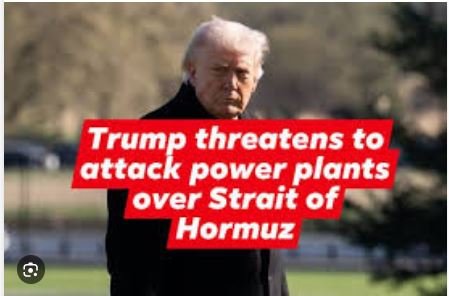
The geopolitical situation in the Middle East has intensified sharply after Donald Trump issued a strong warning to Iran, threatening potential military strikes on its power plants and energy infrastructure. The statement has sparked global concern, with analysts warning of serious economic and humanitarian consequences if tensions spiral further.
Trump’s Warning to Iran
In a bold and controversial statement, Trump warned that the United States could “obliterate” Iran’s energy grid, including power plants and oil facilities, if Tehran does not comply with U.S. demands.
Key highlights of his warning include:
- A demand for Iran to ensure free passage through the Strait of Hormuz
- A clear indication that military action could be taken within days
- Emphasis on targeting critical infrastructure rather than traditional military bases
This marks one of the most aggressive statements in the ongoing conflict.
Why Power Plants Are a Strategic Target
Power plants are among the most critical assets of any country. Targeting them can have widespread effects:
- Massive electricity blackouts across cities
- Disruption of hospitals, water supply, and communication systems
- Severe impact on industries and the economy
Military experts believe that such attacks are designed to cripple a nation’s functioning without direct ground warfare.
🇮🇷 Iran’s Response: Strong and Defiant
Iran has responded with equal intensity, rejecting U.S. threats and denying any ongoing negotiations.
- Tehran called the warnings “provocative and unacceptable”
- Officials warned of retaliatory strikes on U.S. and allied infrastructure
- Iran hinted it could disrupt oil shipments through the Strait of Hormuz
The situation is now seen as a high-risk standoff, where any miscalculation could trigger a broader conflict.
Global Economic Impact
The rising tensions are already affecting global markets:
- Oil prices are seeing a sharp rise due to uncertainty
- The Strait of Hormuz, a key oil transit route, is under threat
- Supply disruptions could lead to global inflation and economic slowdown
Countries heavily dependent on oil imports, including India, may face fuel price hikes and economic pressure if the crisis worsens.
Talks or Tensions?
Interestingly, there have been mixed signals regarding diplomacy:
- Trump indicated a temporary pause in military action
- Claimed that negotiations were ongoing
- However, Iran has denied any formal talks
This contradiction has added more uncertainty to an already volatile situation.
Legal and Humanitarian Concerns
Targeting power plants raises serious international concerns:
- Such strikes could violate international humanitarian law
- Civilian populations would be the most affected
- Human rights organizations have warned of a potential humanitarian disaster
Electricity is essential for modern life, and any disruption can quickly escalate into a crisis affecting millions.
The Bigger Picture
This development is part of a larger geopolitical conflict involving multiple countries in the Middle East. Rising tensions between the U.S., Iran, and regional allies are increasing the risk of:
- Multi-country military escalation
- Disruption of global trade routes
- Long-term instability in the region
Conclusion
Trump’s threat to attack Iran’s power plants represents a serious turning point in international relations. While it may be intended as a strategic warning, the risks involved are enormous.
- Military escalation could impact the entire world
- Energy markets are already reacting
- Diplomatic efforts remain uncertain
👉 The coming days will be crucial in determining whether the situation moves toward peaceful negotiation or a major global conflict.