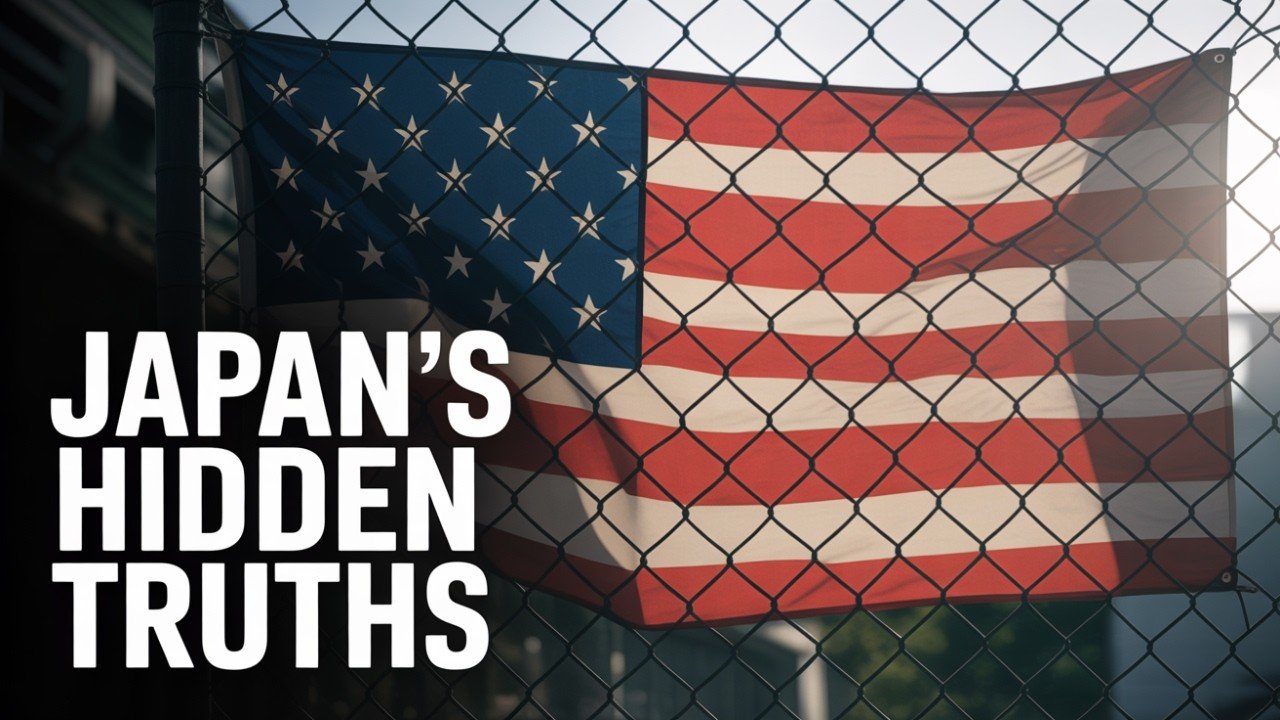
The presence of the United States military in Japan is often presented as a symbol of peace, stability, and protection in the Asia-Pacific region. But beneath this carefully crafted narrative lies a complex reality—one filled with controversy, local resistance, environmental concerns, and geopolitical tension that rarely makes headlines.
Let’s uncover what’s really going on.
The Strategic Truth: Why Japan Matters So Much
At the heart of the story is geography. Japan sits at a critical point in East Asia—close to China, North Korea, and Taiwan. This makes it one of the most important military positions for the U.S.
- The U.S. maintains around 50,000 troops in Japan, making it one of its largest overseas deployments
- Bases in Japan allow rapid response to any conflict in the Indo-Pacific
- Recent deployments like F-35 stealth fighters show increasing military buildup
This isn’t just defense—it’s power projection.
The “Hidden” Reality in Okinawa
While the alliance looks strong on paper, the reality on the ground—especially in Okinawa—is very different.
- 75% of U.S. bases in Japan are concentrated in Okinawa
- Locals have protested for decades against base expansion
- Many residents feel they are carrying an unfair burden
In fact, surveys have shown that a majority of Okinawans want U.S. military presence reduced or removed entirely
This tension is one of the biggest “secrets” rarely discussed globally.
Environmental and Health Concerns
Another issue often kept out of the spotlight is environmental damage.
- Toxic chemicals (PFAS) have been found in water near U.S. bases
- Marine ecosystems have been affected by base construction
- Noise pollution from jets has impacted sleep and health
Hundreds of thousands of residents have reportedly been affected by contaminated water sources
This raises serious questions about long-term consequences.
Rising Military Tensions in the Region
The U.S. presence in Japan is not just about defense—it’s also about deterring China.
- Joint U.S.-Japan military drills are increasing
- Advanced missiles and fighter jets are being deployed
- Bases are becoming potential targets in case of war
Experts warn that these bases could be among the first targets in a conflict
In other words, protection comes with risk.
The Alliance vs. Local Reality
Officially, the U.S.-Japan alliance is one of the strongest in the world. It ensures:
- Security against regional threats
- Military cooperation and technology sharing
- Stability in the Indo-Pacific
But on the ground:
- Locals protest base construction
- Accidents and crimes involving troops have caused outrage
- Legal limitations sometimes prevent Japanese authorities from fully investigating incidents
This gap between policy and reality is rarely highlighted.
Why This Story Matters Now
With rising tensions involving China, Taiwan, and North Korea, Japan is becoming even more militarized.
- New missile systems and defense upgrades are underway
- Joint operations with the U.S. are expanding
- The region is entering a new era of strategic competition
The “secret” isn’t just about military bases—it’s about the cost of global power.
Final Take
The U.S. military presence in Japan is not simply about defense—it’s a complex mix of strategy, politics, and local impact.
What’s often hidden:
- The scale of local opposition
- Environmental and health concerns
- The risk Japan faces in global conflicts
Understanding this gives a clearer picture of how global superpowers operate—and who really pays the price.