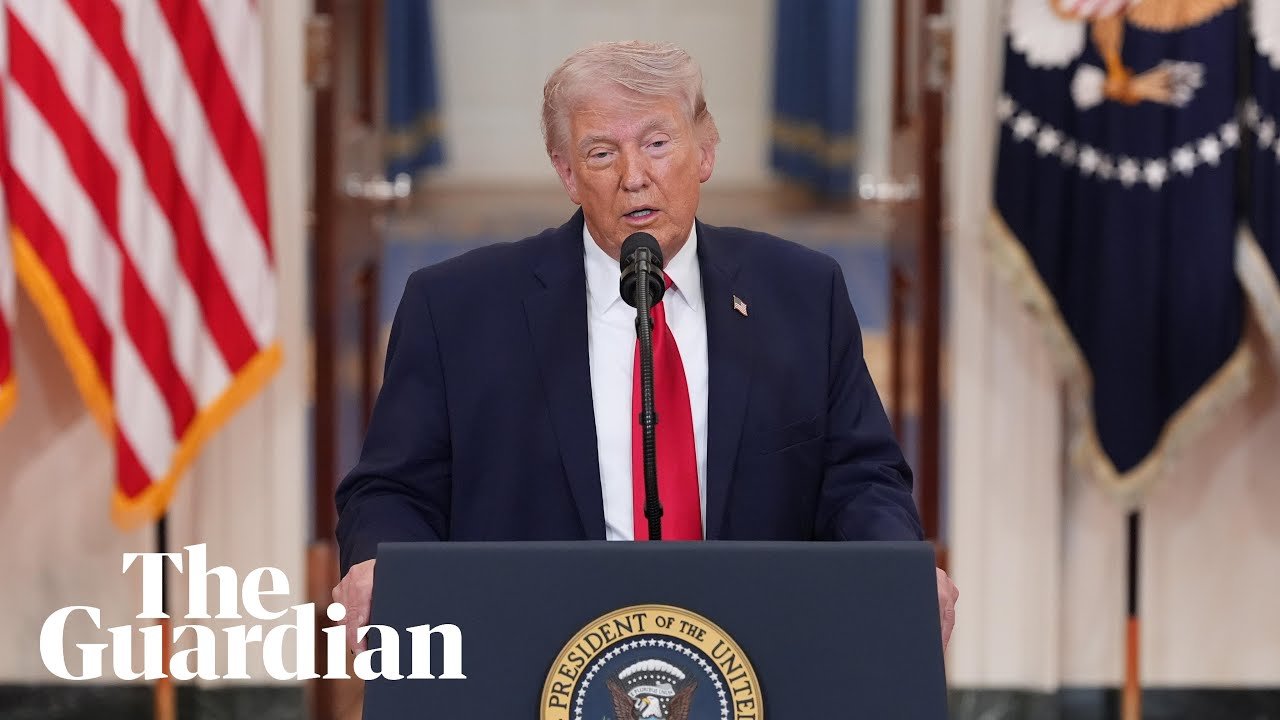
The Middle East crisis has reached a निर्णायक मोड़ after Donald Trump addressed the nation in a prime-time speech, claiming that the United States is close to achieving its military goals in Iran. His statement has intensified global debate, with rising tensions, economic uncertainty, and fears of further escalation dominating headlines.
“We Are Close to Finishing the Job”
In his high-profile address, Trump declared that U.S. forces are “very close to finishing the job” in Iran. He emphasized that key military targets have already been neutralized, including strategic infrastructure linked to missile systems and defense capabilities.
According to the President, the most difficult phase of the conflict is over, and remaining operations could be completed within weeks. However, he did not provide a detailed roadmap for how the war would officially conclude.
War Continues Despite Optimism
Despite projecting confidence, Trump made it clear that military operations are still ongoing. He warned that if Iran refuses to cooperate or enter negotiations, the U.S. could intensify its strikes.
This suggests that while the U.S. is signaling progress, the situation on the ground remains fragile and unpredictable.
Global Impact: Oil, Markets, and Trade Hit
The ongoing conflict has triggered major economic consequences worldwide. Markets reacted negatively following Trump’s speech, highlighting growing uncertainty.
Key impacts include:
- 📈 Oil prices jumping sharply
- 📉 Stock markets declining globally
- ⛽ Rising fuel costs affecting consumers
The situation around the Strait of Hormuz remains particularly critical, as disruptions here can impact global energy supply
🇮🇷 Iran’s Response: No Signs of Backing Down
Iran has rejected U.S. claims that the conflict is nearing an end. Officials have indicated that they will not negotiate under pressure and are prepared to continue resisting military action.
This response raises concerns that the conflict could extend longer than expected, despite U.S. assurances.
🇺🇸 Domestic Pressure Builds in America
Back in the United States, Trump is facing growing criticism over the war. Concerns are rising about:
- Increasing inflation due to fuel prices
- Lack of a clear long-term strategy
- Risk of prolonged military involvement
Public opinion appears divided, with some supporting strong action while others fear another long-term conflict.
What Happens Next?
The coming weeks are expected to be crucial. Key questions remain:
- Will Iran agree to negotiations?
- Can the U.S. achieve a decisive outcome quickly?
- Will global markets stabilize or worsen?
The next phase could determine whether the crisis moves toward resolution—or escalates further into a broader regional conflict.
Conclusion
Trump’s statement that the U.S. is close to “finishing the job” in Iran has added urgency to an already volatile situation. While Washington signals confidence, global reactions suggest caution, with economic and geopolitical risks continuing to rise.
For now, the world watches closely as the Middle East stands at a critical crossroads between resolution and escalation.