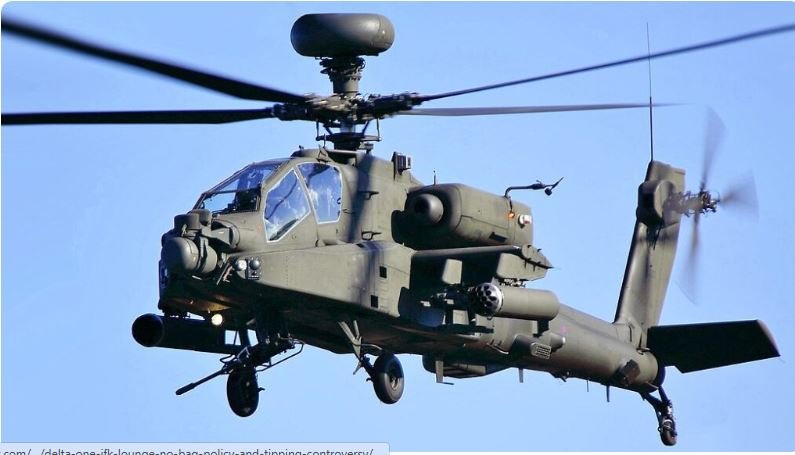
In a dramatic aviation incident that quickly went viral, the United States has decided not to take any action against an Army pilot involved in a controversial low-level helicopter flight. The aircraft in question—widely regarded as one of the most dangerous and powerful attack helicopters in the world—sparked public debate, safety concerns, and political reactions.
What Happened?
The incident took place near Nashville, Tennessee, where AH-64 Apache helicopters from Fort Campbell were seen flying unusually low over a residential area. Videos of the flight spread rapidly across social media, showing the helicopters hovering close to a private property.
Initially, the U.S. Army responded by suspending the aircrew and launching a formal investigation to determine whether aviation safety rules were violated. However, the situation took a surprising turn shortly after.
Why Is the Apache Called “Most Dangerous”?
The AH-64 Apache is one of the most advanced attack helicopters in the world. It is designed for:
- Heavy combat missions
- Anti-tank warfare
- Precision strikes in hostile environments
With powerful weapons, advanced radar systems, and the ability to fly at extremely low altitudes, the Apache is both highly effective and inherently risky—especially during low-level maneuvers near civilian areas.
Low-altitude helicopter flights are considered dangerous because they reduce reaction time and increase the risk of obstacles, terrain impact, or loss of control.
US Government’s Decision
Despite the initial suspension, Defense Secretary Pete Hegseth later announced that:
- The investigation would be dropped
- The pilots would face no punishment
- The crew was cleared to resume duties
This decision effectively ended the controversy from an official standpoint.
According to reports, the flight was part of a routine training mission, although questions remained about whether the helicopter flew too close to private property.
Why the Incident Became Controversial
Several factors turned this into a major news story:
1. Viral Video
A video of the helicopter flying low near a residence gained massive attention online, raising concerns about safety and professionalism.
2. Civilian Area Flight
Military helicopters are expected to follow strict guidelines when operating near populated areas. Any deviation can trigger investigations.
3. Safety Concerns
Recent aviation incidents—including near-misses between helicopters and commercial aircraft—have increased scrutiny on low-altitude operations.
Rising Concerns Over Helicopter Safety
This incident comes at a time when aviation authorities are already tightening rules. The FAA has recently introduced stricter safety regulations for helicopters operating near busy airspace due to past accidents and near collisions.
Experts warn that:
- Low-level flights in urban areas can be unpredictable
- Even experienced pilots face higher risks
- Public safety must remain a top priority
Was It Really Dangerous?
While the Apache is designed for such maneuvers, context matters:
| Factor | Risk Level |
|---|---|
| Open battlefield | Low |
| Training zone | Moderate |
| Civilian residential area | High |
In this case, the location—near private homes—raised eyebrows, even if the maneuver itself wasn’t technically illegal.
Final Verdict
The U.S. government’s decision to take no action suggests that officials found no clear violation of rules. However, the incident has:
- Reignited debate over military conduct in civilian zones
- Highlighted the risks of low-level helicopter operations
- Raised questions about accountability and transparency
📊 Conclusion
The Apache helicopter remains a symbol of military power—but also a reminder of the fine line between training and risk. While the pilots walked away without consequences, the incident has left a lasting impact on public perception and aviation safety discussions.