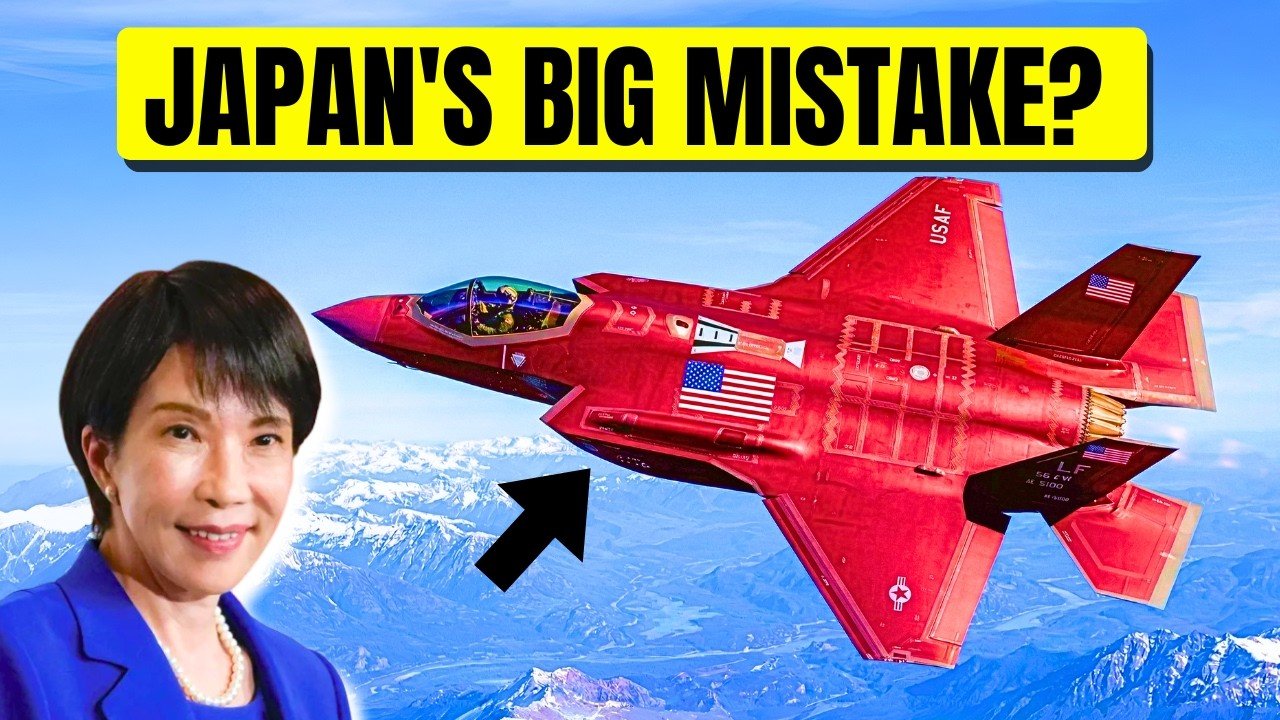
Japan has always been at the forefront of advanced military technology, and at one point, it was working on a next-generation stealth fighter that many believed could outperform the F-35 Lightning II. Known as the F-3 / F-X program, this ambitious project promised to redefine air combat—but its original vision was eventually cancelled.
Here’s the full story behind Japan’s lost fighter and why it still sparks global debate.
🇯🇵 The Vision: A True Air Superiority Fighter
Japan’s F-3 was not just another fighter jet. It was designed to be a pure air dominance platform, similar in role to the F-22 Raptor but with next-generation upgrades.
The aircraft was being developed by Mitsubishi Heavy Industries, building on experience from the experimental X-2 Shinshin stealth demonstrator.
Expected Features:
- Twin-engine configuration for better speed and survivability
- Advanced stealth shaping and radar-absorbing materials
- Large internal weapons bay for increased payload
- AI-assisted combat systems
- Capability to control unmanned drones (loyal wingman concept)
- Next-gen radar and electronic warfare systems
Unlike the F-35, which is a multirole fighter, Japan’s F-3 was expected to focus heavily on air superiority, meaning dominance in dogfights and long-range aerial combat.
Why Japan Cancelled the Original Plan
Despite its potential, Japan decided to abandon the fully indigenous version of the F-3 program. Here’s why:
1. Rising Development Costs
Building a stealth fighter from scratch is incredibly expensive. Estimates suggested costs could run into tens of billions of dollars, putting pressure on Japan’s defense budget.
2. Shift to International Collaboration
Japan merged its program into the Global Combat Air Programme (GCAP) alongside the UK and Italy. This allowed:
- Shared costs
- Access to foreign technology
- Faster development timelines
However, it also meant giving up full control over the aircraft design.
🇺🇸 3. Dependence on the F-35
Japan opted to purchase over 140 F-35 jets, ensuring immediate combat capability instead of waiting for an unproven domestic fighter.
Could It Have Been Better Than the F-35?
This is where the debate gets interesting.
Where the F-3 Could Have Been Superior
- Air Dominance Focus: Designed specifically to defeat enemy fighters
- Twin Engines: More power, range, and redundancy than the single-engine F-35
- Larger Payload: Potentially more weapons carried internally
- Future Integration: Built for drone
- warfare and AI-assisted combat
- Already operational and combat-tested
- where the F-35 Still Leads
- Highly advanced sensor fusion and stealth systems
- Supported by a massive global ecosystem
- Lower risk due to mature technology
👉 In short:
- F-35 = versatile, proven, and widely used
- F-3 = potentially more powerful, but untested and expensive
Not Cancelled—Just Reborn
Japan didn’t completely abandon its fighter ambitions.
The F-3 concept has now evolved into the GCAP sixth-generation fighter, expected to enter service around 2035. This new aircraft aims to combine:
- Advanced stealth
- Artificial intelligence
- Drone teaming capabilities
- Hypersonic and next-gen weapons
It will likely be one of the most advanced fighters ever developed—but it will no longer be purely Japanese.
Final Take
Japan’s cancelled F-3 fighter represents one of the biggest “what if” moments in modern military aviation.
It had the potential to become a true air superiority monster, possibly outperforming the F-35 in several key areas. But due to cost, alliances, and strategic decisions, Japan chose a different path.
Now, the world waits for the next chapter—where that same vision will return in the form of a sixth-generation global fighter.