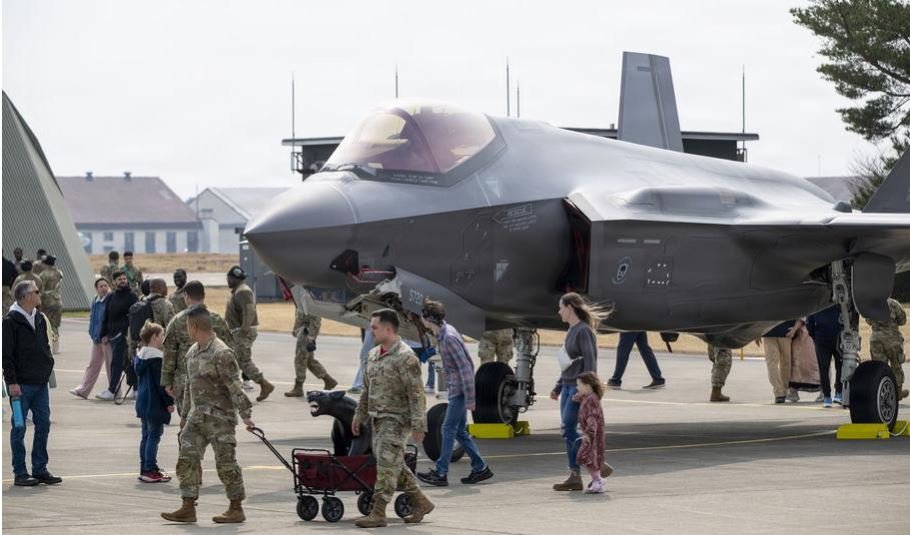
The United States has taken a major step to strengthen its military presence in Asia by deploying advanced F-35A Lightning II stealth fighters to northern Japan. This move signals a strong commitment to regional security and reflects a broader strategy to modernize forces in the Indo-Pacific.
F-35A Jets Arrive at Misawa Air Base
The U.S. Air Force has officially stationed its cutting-edge F-35A jets at Misawa Air Base, a critical military hub in northern Japan. These aircraft belong to the 13th Fighter Squadron under the 35th Fighter Wing.
This deployment is significant because:
- It introduces fifth-generation fighter capabilities to the region
- It replaces older F-16 aircraft, marking a shift toward modernization
- It enhances the strategic importance of Misawa as a forward-operating base
Misawa Air Base plays a key role in ensuring quick response and operational readiness across Northeast Asia.
Why the F-35A Is a Game Changer
The F-35A Lightning II is among the most advanced fighter jets in the world, designed for modern warfare scenarios.
Key Features:
- Stealth Capability: Enables operations in high-risk zones without detection
- Advanced Sensor Fusion: Provides unmatched situational awareness
- Electronic Warfare Strength: Disrupts enemy systems effectively
- Multi-Role Flexibility: Handles both air-to-air and air-to-ground missions
These capabilities allow the U.S. Air Force to maintain a technological edge in increasingly complex combat environments.
Strategic Importance in the Indo-Pacific
The Indo-Pacific region is currently one of the most strategically important and sensitive areas globally. Rising tensions and evolving security challenges make military preparedness essential.
With this deployment, the U.S. aims to:
- Strengthen deterrence against regional threats
- Maintain air superiority in critical zones
- Improve rapid deployment and response capability
Northern Japan’s location offers a tactical advantage, enabling quick access to key areas in East Asia
Boost to U.S.-Japan Defense Cooperation
The move also strengthens the long-standing defense partnership between the United States and Japan.
- Japan’s Air Self-Defense Force also operates F-35 jets
- Joint exercises and coordinated missions will become more effective
- Enhances interoperability between allied forces
This cooperation ensures both countries are better prepared to handle emerging security challenges together.
Part of a Broader Military Modernization Plan
The F-35A deployment is part of a larger U.S. strategy to upgrade its global military footprint.
Key Goals:
- Expand fifth-generation fighter presence
- Replace aging aircraft with modern systems
- Reinforce alliances across the Indo-Pacific
Defense analysts suggest that additional deployments could follow, further strengthening U.S. capabilities in the region.
Final Takeaway
The deployment of F-35A fighters to northern Japan is more than just a routine military update—it represents a strategic shift toward advanced warfare readiness and regional stability.
With enhanced technology, stronger alliances, and a forward presence, the U.S. is clearly positioning itself to respond effectively to future challenges in the Indo-Pacific.