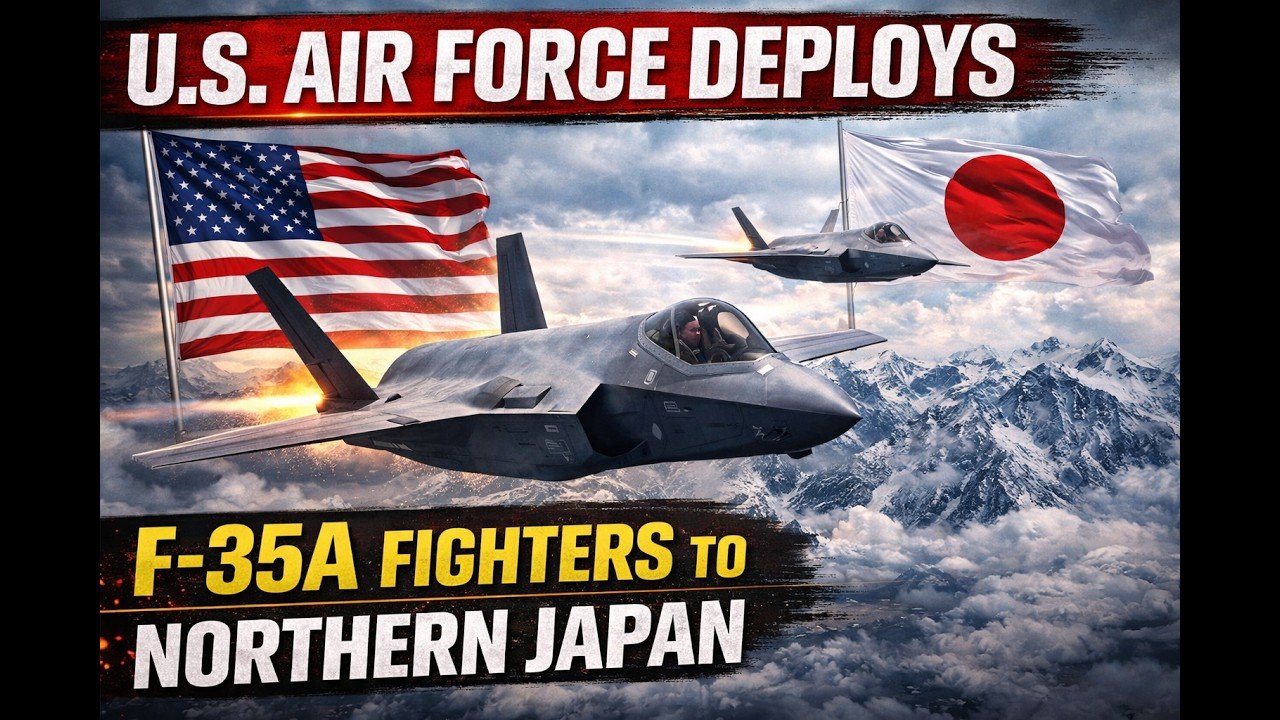
The United States has made a significant military move by deploying its advanced F-35A Lightning II stealth fighters to northern Japan. This deployment marks a major upgrade in airpower and highlights Washington’s growing focus on strengthening security in the Indo-Pacific region.
F-35A Jets Arrive at Misawa Air Base
The U.S. Air Force has officially stationed F-35A fighter jets at Misawa Air Base, a key military installation located in northern Japan. These aircraft are part of the 13th Fighter Squadron under the 35th Fighter Wing.
This move is important because:
- It introduces fifth-generation fighter capability to the region
- It replaces older F-16 fighter jets, signaling modernization
- It enhances the operational strength of one of the most strategic U.S. bases in Asia
Misawa Air Base plays a crucial role in maintaining stability and rapid response capability across Northeast Asia.
Why the F-35A Is a Game Changer
The F-35A Lightning II is considered one of the most advanced fighter jets in the world. Its cutting-edge technology gives it a major advantage over older aircraft.
Key Features:
- Stealth Technology: Allows it to avoid radar detection
- Advanced Sensors: Provides real-time battlefield intelligence
- Electronic Warfare Capabilities: Can disrupt enemy defenses
- Multi-Role Functionality: Performs both air combat and ground attack missions
Because of these features, the F-35A significantly improves the U.S. Air Force’s ability to operate in contested environments.
Strategic Importance of the Deployment
The Indo-Pacific region has become increasingly sensitive due to rising geopolitical tensions. By deploying F-35A jets to northern Japan, the U.S. aims to:
- Strengthen deterrence against potential threats
- Ensure rapid military response capability
- Maintain air superiority in the region
Northern Japan’s location allows quick access to key areas, making it an ideal base for advanced fighter operations.
Strengthening U.S.-Japan Defense Cooperation
This deployment also strengthens the military partnership between the United States and Japan.
- Japan’s Air Self-Defense Force also operates F-35 jets
- Both countries can now conduct joint training and operations more effectively
- Enhances coordination in case of regional conflicts
The shared use of advanced fighter technology improves interoperability and overall defense readiness.
Part of a Larger Military Strategy
The deployment is not an isolated move but part of a broader U.S. defense strategy focused on modernization and forward presence.
Key objectives include:
- Expanding the presence of fifth-generation fighters
- Replacing aging aircraft with advanced systems
- Strengthening alliances in the Indo-Pacific
Experts believe more F-35A deployments could follow in the future, further boosting regional security.
Final Takeaway
The deployment of F-35A fighters to northern Japan represents a major step in enhancing U.S. military capability in Asia. It reflects a clear strategy to modernize forces, strengthen alliances, and maintain stability in a rapidly changing geopolitical environment.
As tensions continue to evolve in the Indo-Pacific, moves like this underline one key message:
The U.S. is committed to maintaining a strong and ready presence in the region.